Okuma görünümü

Top Technology Trends to Watch in 2026

AAs we enter the time of continued advances in technology, we will no longer view ourselves as having control over or managing our technology. Rather, we will view our technology more like a tool we use for our convenience rather than as something we control; it will have developed into an effective invisible partner that adds tremendous value to how we operate our businesses daily. As a result, users will gain more confidence in their business technology choices.
As people’s interests move away from the high-tech flashes associated with newly developed technology, they are becoming more focused on tools and services that create efficiency in their business environment while freeing them from unnecessary burdens so they can focus on achieving their ultimate goals and objectives.
Companies that are implementing smarter technologies today are using them not only to compete but to become more efficient and resilient while connecting with their employees in a more engaging manner. This transition signals a shift into a future where technology exists seamlessly as part of every element of a user’s daily life.

#1. Agentic AI and Autonomous Intelligence

A significant technology trend for 2026 will be Agentic AI. Agentic AI is a type of AI that has the capability of making decisions, planning work and changing how to do it, or being seen as a way to adapt to new situations without needing specific directions from a human.

For example, agentic AI would be a supply chain situation where an agentic AI can detect a delivery delay, automatically reroute the shipment to the next nearest shipping point, and then change the entire delivery schedule based on the new routing, all without any human involvement. The ability of agentic AI to accelerate the speed of operations and maximise accuracy, coupled with the fact that it allows humans to focus on higher-level strategy and decision making instead of repetitively performing the same tasks, will greatly benefit workplace productivity as one of the key drivers of growth in the future.

#2. Intelligent Applications Become the New Standard

Applications will be developed with the knowledge learned through machine learning, so they will be easier to use, as they will already have been trained to provide their users with insights, advice, suggestions, and predictions to help them make better-informed choices.

For example, sales platforms may be able to analyze customers’ purchasing behavior and combine this information with data from other leads or existing customers to suggest the optimal moment to make significant contact to follow up on a potential lead. Likewise, a project management application may be able to alert teams of potential project delays or difficulties before they occur. In essence, this allows applications to save teams time, increase productivity, and provide users with maximum utility from the applications they currently use without having to spend time and effort learning how to use the application.

#3. Predictive and Adaptive Cybersecurity

As the world becomes increasingly reliant on the Internet, the nature of Cybersecurity will continue to evolve into a much more proactive model of protecting networks and devices via intelligent tools that will not only catch hackers after they have breached the defenses of a digital system but also be able to anticipate their actions and prevent intrusions prior to occurring. Advanced security tools in 2026 will,

For example, monitor user activity, network traffic, system behavior and identify any form of suspicious or dangerous activity. When suspicious activity is detected, the advanced tools will either automatically suspend a user’s account until a security administrator has investigated the situation, or the advanced tools will notify a security administrator of potentially dangerous or malicious user account activity. This proactive strategy will not only mitigate the risk of a potential cybersecurity breach, thereby reducing the downtime associated with recovering from an attack, but it will also foster an atmosphere of greater trust and safety when users utilize digital systems.

#4. Low-Code and No-Code Platforms Drive Faster Innovation

As a result of low-code and no-code development platforms, non-traditional developers now have the means and tools to create new software. Using these platforms, non-technical teams can create, manage, and launch their apps and ideas much more quickly and easily than in traditional models.

For example, an internal ticket routing tool or automatically managed processes can now be created by the customer care team without them needing to understand any coding languages. By directing the power of development to an increasing number of employees, organizations become faster in responding to their customers with solutions to the issues that have arisen and in making changes in how they conduct business based on evolving market conditions and changing customer expectations.

#5. Industry-Focused Technology Solutions

Over time, general-purpose software solutions increasingly are being supplanted with highly specialized industry solutions that were created specifically to meet the needs of individual industries. Instead of having software that can do just about anything but does not address a specific Industry’s needs, future technology would be created to address the unique Workflows, Governmental Compliance/regulatory requirements, as well as specific challenges, for different Industries.

For example, would be a Logistics Solution that focuses entirely on Route optimization, shipment tracking, and delays in delivery, versus a Health Care Solution focused on managing patient records, scheduling appointments, and governmental compliance/regulatory requirements of the medical industry. By having solutions customized specifically for individual industries, businesses can perform their tasks with increased efficiency while reducing error rates and speeding up implementation, because the solutions were tailored to meet actual needs versus having to conform to a generic-type solution.

#6. Human-Centered Design Takes Priority

As technology becomes more advanced and capable, it will be essential to make technology easier to interact with, use and understand through better design and experience as we progress into the future. As we move beyond 2025, organisations will start to prioritise the user experience and will create an experience for the user which is easy to navigate through; has clear and concise information, has intuitive design features, and is simple for the user to learn how to use. 

For example, a transition may include an analytics dashboard where the user would see information presented in a straightforward manner (perhaps writing the name of the data set rather than using complicated graphs or charts) thus, enabling the user to understand the information quickly and produce insightful reports quickly. Designing technology with humans in mind enables a user-friendly approach to using a product, allowing users to be confident and work more efficiently and productively.

#7. Real-Time Data and Decision Intelligence

Businesses will no longer treat data after-the-fact, but rather will analyze and utilize information in the moment to aid in making the best possible decision.

For example,  an e-commerce business may see what customers are buying (in real time) and therefore change pricing or stock quantity on certain products based on how many people are buying those products at any given time. An Online Store will also be able to see what products are trending, so they can replace those items faster than before.  All organisations have the opportunity to respond to quickly changing consumer behaviour by leveraging the capabilities of real-time information.  This allows all organizations to satisfy customer demands quickly, effectively and efficiently, while also ensuring they stay competitive within a very competitive environment, where every decision is important.

#8. Sustainability-Driven Technology Adoption

The role of sustainability in businesses will continue to grow as businesses choose and utilize technology. More businesses are starting to utilize digital technology to help them monitor their energy usage, the amount of waste produced, and the overall effects they have on the Earth.

For example, would be a smart building that automatically adjusts the lighting and temperature settings based on how many people are in the building, which saves energy without any effort on anyone’s part to turn off lights or adjust the

temperature manually. Another added advantage of these technologies is that they lower operating costs, allowing companies to operate in both a sustainable manner and with good economics.

With sustainable practices integrated into daily business operations, companies can strive for the optimal ability to operate efficiently, grow, and have accountability towards the future of our Planet.

Conclusion

The year 2026 will likely see an increase in the adoption of technology that is focused on solving women’s and family concerns in a timely manner. The adoption of smarter AI technology, the launch of simpler user experiences, enhanced safety and security, and real-time decision-making are all trends accelerating the trend of creating fewer barriers to accessing critical resources (their most common example is the human experience). Adopting these consumer-focused technologies will allow businesses to operate in a more efficient and streamlined way, altogether.

Technology’s purpose is to improve our ability to accomplish our goals and increase the amount of trust between business partners (for example, a business and its employees) and those conducting transactions with each other (for example, buying products). Individuals who adopt these consumer-centered technologies at an earlier stage will find it much easier to anticipate future needs regarding growth and innovation and remain competitive in a rapidly changing digital landscape.

  •  

Today’s Top 7 Digital Marketing News & Updates (2026 News & Updates)

Google Search Console Adds New Social Media Metrics

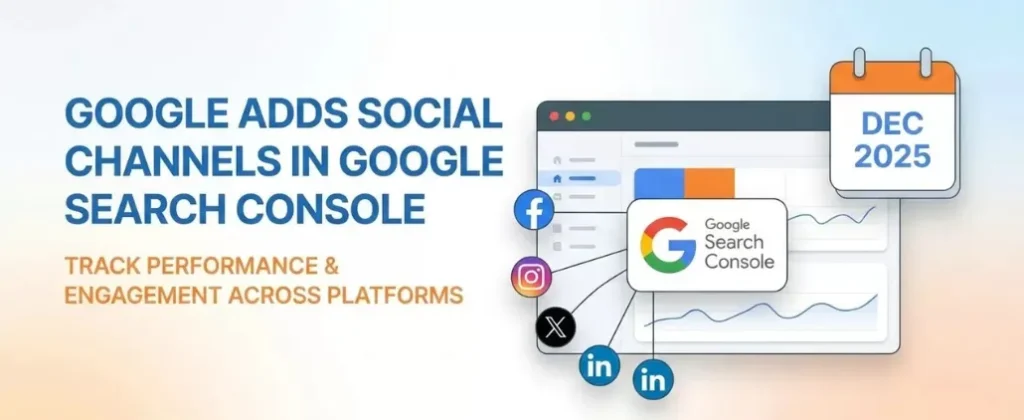
Google Adds Social Channels in Google Search Console Track performance & engagement across platforms

Source: 6smarketers

Google has introduced an experimental update to Search Console Insights that adds social media channel performance data alongside website search metrics. This update helps marketers see how their social profiles and content perform in Google Search from one unified dashboard.

With this feature, teams can track social clicks, impressions, trending content, and audience insights without relying on multiple analytics tools. The goal is to improve visibility into how search and social work together, making it easier to align SEO and social strategies.

The feature is currently available to selected properties only and is being tested by Google, with a wider rollout expected in the future. Overall, it offers a more connected view of brand performance across search and social channels, saving time and improving data-driven decision-making.

DEC 2025

  • Track social clicks in Search.
  • View unified brand performance data.
  • Limited testing for selected properties.
  • Enhances organic social strategy insights.

Meta Tests New Link Sharing Limits for Businesses

Google has launched a new experimental update in Search Console Insights that includes social media channel data along with website performance metrics. This update helps marketers understand how their social profiles and posts appear and perform in Google Search.

Users can now see key details like clicks, impressions, trending social content, and audience insights in one place. This makes it easier to connect SEO and social media performance without switching between tools.

The feature is currently available to selected users only as Google tests it further. Overall, this update helps brands get a clearer picture of their online visibility and make better, data-driven marketing decisions.

  • Restricts links on business profiles.
  • Encourages native platform content usage.
  • Impacts referral traffic for marketers.
  • Aims to increase user retention.

Google Discover Integrates Advanced “AI Mode” Features

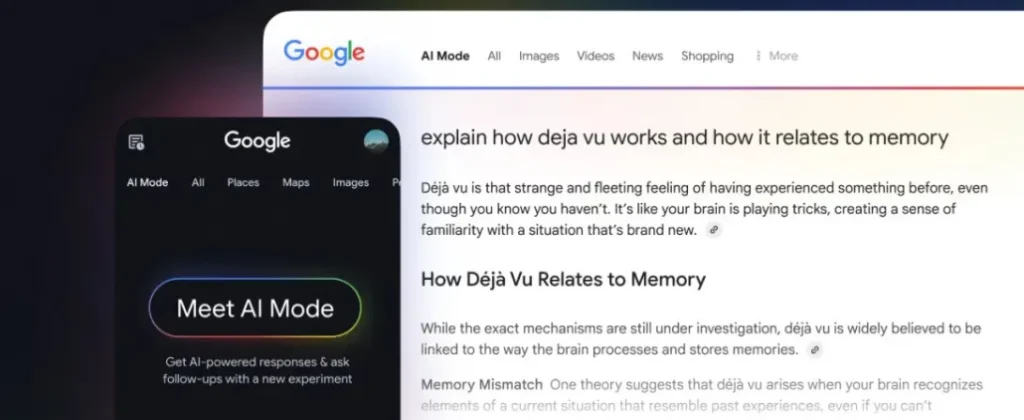
Meet AI Mode Get AI-powered responses & ask follow-ups with a new experiment

Google is expanding AI-powered features in Search to help users handle more complex questions. AI Overviews, now used by over a billion people, are being upgraded with Gemini 2.0 in the U.S., starting with coding, advanced math, and multimodal queries. These updates deliver faster, higher-quality responses and are now available to teens, with no sign-in required.

Google is also testing a new AI Mode in Search through Labs. This mode offers deeper reasoning, follow-up questions, and helpful web links for complex, multi-part searches. It combines Gemini 2.0 with real-time data sources like the Knowledge Graph and shopping information to deliver more detailed answers.

AI Mode is currently a limited, opt-in experiment, starting with Google One AI Premium users. Google will refine it based on feedback before wider rollout.

  • Summarize articles directly in feed.
  • Ask follow-up questions about news.
  • Links to source content included.
  • Improves transparency for web publishers.

DeepSeek R1 Model Disrupts Global AI Market

DeepSeek R1 Model Disrupts Global AI Market

DeepSeek is a Chinese AI startup that is disrupting the global AI industry with high-performance, low-cost AI models. Its latest models, DeepSeek-V3 and DeepSeek-R1, are claimed to match or outperform leading U.S. models from OpenAI and Meta, but at a fraction of the cost.

DeepSeek drew major attention after revealing that training DeepSeek-V3 cost under $6 million, far less than what U.S. companies typically spend. Its AI assistant has even overtaken ChatGPT as the top free app on Apple’s U.S. App Store.

The company’s success is challenging assumptions behind massive AI spending by U.S. tech firms and has impacted investor confidence. DeepSeek-R1 is reported to be 20–50 times cheaper than comparable OpenAI models, making advanced AI more accessible and reshaping the competitive AI landscape.

  • Open-source model matches top competitors.
  • Lower training costs shock industry.
  • Shakes US tech firm dominance.
  • Developers get free model access.

Snapchat Debuts Text-to-Lens AI Creative Feature

Snapchat Launches “Imagine”: It’s First Open Prompt AI Lens

Snapchat has made its Imagine Lens, a text-to-image AI Lens, available to all users in the U.S. with no subscription required. Previously limited to paid users, the feature is now expanding to Canada, UK, and Australia.

The Imagine Lens lets users create custom visuals by typing a text prompt directly into the Snapchat camera. Users can instantly generate creative scenes, try out ideas, and share them with friends or on Stories. Snapchat is also offering free generations so everyone can try it out.

This update makes AI-powered creativity more accessible and encourages users to explore, create, and share unique content easily within Snapchat.

  • Generates lenses from text prompts.
  • Boosts AR engagement for brands.
  • Simplifies complex 3D asset creation.
  • Available for immediate user testing.

X Launches New Creator Studio Hub for Mobile

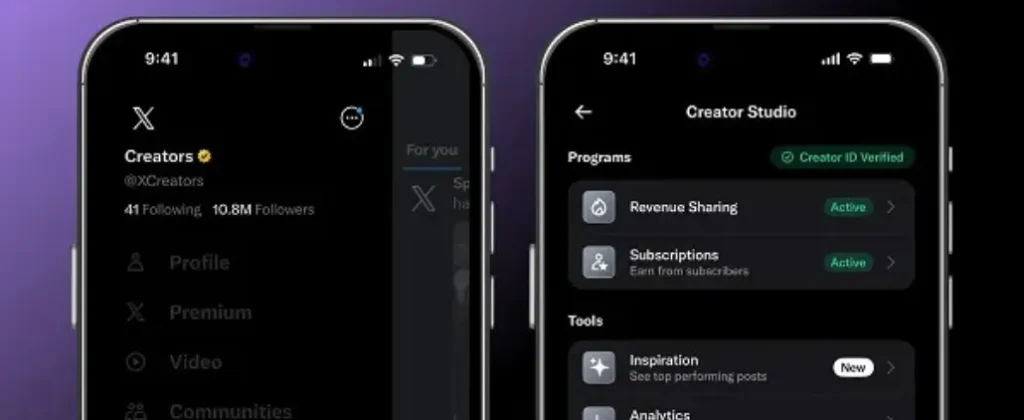
X has launched a new Creator Studio in its mobile app, giving creators a single hub to manage tools and insights on the go. The new tab provides quick access to revenue sharing status, subscriptions, analytics, payment settings, and creator support.

Creators can now easily track earnings, check eligibility for monetization features, and monitor performance directly from the mobile app, features that were previously limited to desktop.

X has also added an Inspiration tab that highlights top-performing posts over daily, weekly, and monthly periods. This helps creators understand what content is trending and get ideas for their own posts. Overall, the update makes content management and performance tracking more convenient for mobile-first creators.

  • Tracks growth and monetization stats.
  • Provides holiday marketing trend insights.
  • Simplifies mobile content management tasks.
  • Aims to attract more creators.

YouTube Shares Insights on Viral Video Thumbnail Data

YouTube data shows that thumbnails play a major role in driving video clicks and success. Around 90% of top-performing videos use custom thumbnails, and viewers decide whether to click within milliseconds.

Videos with higher click-through rates (CTR) are promoted more by YouTube, especially when paired with good watch time. Thumbnails featuring human faces, emotions, clear text, and strong contrast tend to perform better. Consistent design also helps build brand recognition.

YouTube allows creators to A/B test thumbnails using built-in tools, while AI-powered tools are increasingly used to improve designs. Most importantly, thumbnails must match the content to avoid clickbait and low retention.

  • Analyzes 300k top-performing videos.
  • Faces in thumbnails show consistency.
  • Niche differences impact click rates.
  • Helps creators optimize visual strategy.

Related Post: Top 30 HR Interview Questions And Answers For Freshers

  •  

DeepSeek vs ChatGPT

The world of AI is evolving at lightning speed, and two names that are making waves are DeepSeek and ChatGPT. But what sets them apart?

Let’s break it down!

ChatGPT vs DeepSeek: Feature-by-Feature Comparison

CategoryChatGPT (OpenAI)DeepSeek
CompanyOpenAI (USA)DeepSeek AI (China)
Founded2015 (ChatGPT launched 2022)2023
Founder / LeadershipSam Altman (CEO), OpenAI leadership teamLiang Wenfeng (Founder)
Core ProductConversational AI assistant + APIOpen-source AI models + API
Primary ModelsGPT-3.5, GPT-4, GPT-4 TurboDeepSeek-V3, DeepSeek-R1, DeepSeek-Coder, DeepSeek-VL
Model TypeProprietary, closed-sourceOpen-source (MIT license)
ArchitectureDense transformer modelsMixture-of-Experts (MoE)
Reasoning CapabilityVery strong (GPT-4)Extremely strong (R1 rivals GPT-4/o1)
Coding PerformanceExcellent (GPT-4 leads)Best-in-class among open models
Math & LogicHigh accuracyOften matches or exceeds GPT-4
Multimodal SupportText, image, voice, filesText, image (DeepSeek-VL)
Context LengthUp to ~128K (model-dependent)Up to 128K (Coder), 64K+ reasoning
Training Cost (Est.)$100M+ per major model~$5–6M (V3)
Inference CostHighVery low (10–30× cheaper)
API PricingExpensiveExtremely affordable
CustomizationLimited (no self-hosting)Full self-hosting & fine-tuning
Data PrivacyCloud-based (enterprise options)Full control if self-hosted
Ease of UseBest-in-class UXTechnical, developer-focused
EcosystemPlugins, tools, enterprise featuresGrowing open-source ecosystem
Security & GuardrailsVery strictFewer built-in restrictions
Best ForGeneral users, enterprises, content, researchDevelopers, startups, cost-sensitive teams
Main WeaknessCost, closed systemUI polish, safety tooling
PhilosophyAI as a managed serviceAI as open infrastructure

DeepSeek

DeepSeek is a China-based AI research lab and startup founded in 2023 by Liang Wenfeng (Hangzhou, Zhejiang). It’s officially registered as Hangzhou Deeply Seeking AI Technology Research Co., Ltd. and is widely known for building high-performance open-source AI models with an unusually strong focus on cost efficiency and engineering optimization.

Why it started: DeepSeek’s goal is to push frontier AI capability while keeping models accessible and open (weights + papers), proving top-tier results don’t require massive budgets. It’s also shaped by Liang’s background in AI and quantitative finance, where efficient modeling and real-world decision systems matter.

Funding & management: DeepSeek is largely self-funded, backed by Liang and his hedge-fund ecosystem (often linked to High-Flyer). It’s notable for having no major VC/Big Tech investors, giving it freedom to prioritize research and open releases. Liang is the key decision-maker/leader.

  • Focused on domain-specific expertise and precision.
  • Designed for industry-specific applications like healthcare, finance, or legal.
  • Excels in deep analysis and tailored solutions for niche use cases.
  • Ideal for professionals looking for specialized insights and actionable intelligence.

What it does best: DeepSeek is especially strong in:

  • Reasoning and math (multi-step problem solving), via models like DeepSeek-R1 and RL-heavy training approaches.
  • Coding (generation, debugging, multilingual coding), via DeepSeek-Coder and DeepSeek-Coder-V2, including long-context use cases.
  • Efficiency at scale, using Mixture-of-Experts (MoE) designs so only part of the model “activates” per request, cutting inference cost while keeping high capability.

Model lineup (high level):

  • DeepSeek LLM / V-series (V2/V3): general-purpose LLMs, with MoE scaling for strong performance at lower cost.
  • DeepSeek-R1: reasoning-focused model competing with top proprietary “reasoning” systems on several benchmarks.
  • DeepSeek-Coder / Coder-V2: specialized coding models with large context windows.
  • DeepSeek-VL / VL2: multimodal (image + text) models tuned for practical visual tasks like OCR/docs/screenshots.
  • DeepSeek-Math / Prover: math reasoning and formal theorem proving (Lean).

ChatGPT

ChatGPT is a conversational AI product developed by OpenAI, designed to understand and generate human-like text (and now images, audio, and code). It officially launched to the public in November 2022, quickly becoming one of the fastest-growing consumer applications in history.

Origin & Purpose

OpenAI was founded in 2015 by Sam Altman, Elon Musk, Greg Brockman, Ilya Sutskever, and others, with the mission to ensure artificial general intelligence (AGI) benefits humanity. ChatGPT was created to make OpenAI’s advanced language models usable through a simple chat interface for everyday tasks, businesses, and developers.

Leadership & Organization

  • CEO: Sam Altman
  • CTO: Mira Murati (until 2024; leadership evolving)
  • Structure: “Capped-profit” company
  • Funding: Major backing from Microsoft (over $10B), plus venture capital and cloud partnerships

Underlying Models

ChatGPT is powered by OpenAI’s GPT (Generative Pre-trained Transformer) models:

  • GPT-3.5: Free-tier model (basic reasoning, writing, Q&A)
  • GPT-4 / GPT-4 Turbo: Advanced reasoning, coding, and creativity
  • Multimodal GPT-4: Handles text, images, voice, and documents

Models are trained on a mix of licensed data, human-created data, and publicly available information, then refined using RLHF (Reinforcement Learning from Human Feedback) for alignment and safety.

What ChatGPT Does Best

ChatGPT excels at:

  • Natural language writing and editing
  • Coding, debugging, and technical explanations
  • Reasoning, problem-solving, and math
  • Summarization and research assistance
  • Multimodal tasks (image understanding, voice interaction)

It performs especially well in general-purpose reasoning and conversational fluency, often setting the benchmark for consumer AI assistants.

Product & Access

  • Free: GPT-3.5
  • ChatGPT Plus: GPT-4 access, tools, multimodal features
  • Team / Enterprise: Security, admin controls, private data handling
  • API: Pay-per-token pricing for developers

Safety & Limitations

ChatGPT uses strict safety guardrails, content moderation, and refusal mechanisms. However, it can be conservative, restricted, or slower in reasoning compared to newer “reasoning-first” models like DeepSeek-R1.

Competitive Position

ChatGPT leads in usability, ecosystem, and polish, while competitors like Claude focus on safety, Gemini on Google integration, and DeepSeek on efficiency and open-source performance.

Bottom line: ChatGPT is the most widely adopted, general-purpose AI assistant today, strong in quality and experience, but premium-priced and closed compared to newer open challengers.

  • A general-purpose AI built for broad conversational capabilities.
  • Great for creative content generation, brainstorming, and casual interactions.
  • Widely used for customer support, content creation, and everyday problem-solving.
  • Known for its user-friendly interface and versatility.

Key Difference:

While ChatGPT is your go-to for general-purpose tasks, DeepSeek shines when you need deep, industry-specific expertise.

Think of ChatGPT as the Swiss Army knife of AI, and DeepSeek as the specialized tool for precision work.

  •  

A Practical 90-Day SEO Plan for 2026 (With Real Examples)

SSEO strategies sound great on paper. In reality, growth comes from fixing boring problems, making small improvements consistently, and learning from real data.

This 90-day SEO plan is built around what actually works in 2026, with examples and insights you’ll recognize if you’ve ever worked on a real website.

Days 0 – 30: Fix What’s Broken Before Trying to Grow

Most SEO failures happen because teams skip the basics and jump straight to content production.

Every SEO win I’ve seen started with fixing technical issues no one wanted to look at.” SEO Consultant, B2B SaaS

Run a Full SEO Audit

A proper audit often reveals surprising problems.

Real example: A SaaS website publishing weekly blogs saw no traffic growth. The audit revealed 40% of its pages weren’t indexed due to incorrect canonical tags. Fixing that alone led to a 22% increase in organic traffic within a month.

Fix Crawl Errors and Broken Links

Broken links don’t just hurt SEO, they frustrate users.

Real example: An education platform fixed over 300 broken internal links after a site migration. Within weeks, crawl stats improved and several previously “lost” pages started ranking again.

If Google struggles to move through your site, users probably do too.

Set Up Search Console and Analytics

Without clean data, SEO decisions become guesswork.

Real example: After properly setting up GA4 events, a hiring tech company realized its highest-traffic page had the lowest conversion rate, leading to a content rewrite that doubled demo sign-ups.

Do Keyword Research Based on Intent

High-volume keywords often bring the wrong audience.

Real example: A recruitment SaaS stopped targeting “video interview software” alone and created content around long-tail queries like “one-way video interview for universities”. Result: fewer visits, but higher-quality leads.

Intent beats volume every single time.

Days 31 – 60: Improve Content and Build Trust

Once the foundation is solid, content starts doing the heavy lifting.

Update Old Content Before Writing New Posts

Refreshing content is faster, and often more effective.

Real example: A healthcare blog updated 15 older posts with new data, FAQs, and better formatting. No new content was published for a month, yet organic traffic grew 18%.

SEO isn’t always about creating more—it’s about improving what already exists.

Write Long-Tail, Problem-Focused Content

Long-tail keywords attract users who are closer to action.

Real example: Instead of generic blogs, a B2B brand published content answering very specific questions like “How to reduce interview drop-offs in campus hiring.” These pages didn’t go viral, but they converted.

Start Backlink Outreach the Right Way

Link building works best when it feels natural.

Real example: A SaaS company earned backlinks by contributing expert quotes to industry articles instead of cold pitching guest posts. Fewer emails, better links.

One contextual link from the right site is worth more than ten generic guest posts.

Optimize for Featured Snippets and Rich Results

Clear answers help both users and search engines.

Real example: Adding short Q&A sections helped multiple blog posts earn featured snippets, increasing click-through rates without ranking #1.

Days 61- 90: Scale, Optimize, and Convert

At this stage, SEO shifts from traffic to business impact.

Scale What’s Already Working

Not all content deserves scaling, only what performs.

Real example: After noticing high engagement on “how-to” guides, a SaaS brand doubled down on that format. Those guides became their top organic lead drivers.

SEO growth accelerates when you stop experimenting and start repeating success.

Improve Landing Pages and Conversions

SEO traffic only matters if it converts.

Real example: Changing a CTA from “Book a Demo” to “See How It Works for Your Hiring Team” increased conversions by 27%, with no traffic increase.

Review Results and Plan the Next Cycle

SEO is iterative.

Real example: One team found that pages ranking in positions 5–10 were the fastest wins. They focused solely on improving those pages during the next 90 days—and saw quicker results than chasing new keywords.

The second 90-day SEO plan always performs better than the first—because now you have real data

Final Thoughts

SEO in 2026 isn’t about hacks or shortcuts. It’s about:

  • Fixing real problems
  • Writing content for real users
  • Measuring real outcomes

A 90-day SEO plan gives you direction—but the results come from execution, iteration, and patience.

  •  

Top 10 Web3 Development Companies for 2025

Summary: The article helps you get familiar with a list of the top Web3 development companies that lead innovation in 2025. These are the firms that specialize in blockchain, DeFi, smart contracts, NFTs, and decentralized apps to provide safe, scalable, and business-grade solutions. They focus on agile delivery to empower the cutting-edge digital ecosystems.

Web3 is making a significant transformation in how the Internet operates. It focuses on transparency, security, scalability, and user control. Businesses today are using Web3 to develop apps with smart contracts, blockchain, decentralized finance, and NFTs. Whether you are rolling out a crypto wallet or developing a metaverse experience, the companies mentioned below lead the web3 innovation with their proficient teams and years of experience. With the rising prevalence of Web3, it is crucial to select an appropriate development partner. The present guide highlights the top Web3 development companies that deliver reliable blockchain solutions across different sectors.

List of Top 10 Trusted Web3 Development Companies for 2025

Now, let’s review the details of some of the top web3 development companies popular for delivering reliable, scalable, secure, and advanced blockchain solutions across diverse sectors.

1. eSparkBiz

  • Clutch Rating: 4.9
  • Established In: 2010
  • Projects Completed: 1000+
  • Price: $12 to $25 / hr
  • Time Zone Availability: GMT, ECT, IST, JST, MET, AET, NST,  CST, PST, EST
  • Min Project: $5,000+
  • Employees: 400+

eSparkBiz is renowned as one of the prestigious web3 development companies, as it benefits enterprises with efficient, scalable, and decentralized solutions. The delivered solutions aptly match the modern business requirements and provide long-term strategic support.

Its web3 development services allow businesses to develop future-proof blockchain solutions using smart contracts, blockchain technology, and decentralized infrastructure. The company excels with its agile development processes and technical expertise that help it develop enterprise-grade Web3 solutions. You may be looking for a scalable app, dApp development, blockchain architecture, tokenization, etc. The company supports a seamless adoption of decentralized technology.

2. Jalasoft

  • Clutch rating: 4.9
  • Foundation year: 2001
  • Timezones: 5
  • Hourly rate: $25 – $49 / hr
  • Min project size: $100,000+
  • Employees: 1,000+

The key specialityspecialty of Jalasoft is nearshore software development. It provides full-cycle services in frontend, backend, DevOps, QA, and cloud. It is also well-known for its expertise in secure engineering, scalable architectures, Azure, and cutting-edge technologies (such as Azure and microservices). This level of versatility makes it competent to support decentralized or blockchain-based applications.

Their engineers enable same-time-zone collaboration and prioritize agility. You can have a direct consultation through its expert on demand model. It operates across 74 cities, suggesting its broad presence. Besides, it is ISO 27001 certified, which further contributes to its fame as one of the best web3 development companies.

3. Iron Forge Development

  • Clutch rating: 4.8
  • Foundation year: 2016
  • Timezones: 12
  • Hourly rate: $150 – $199 / hr
  • Min project size: $25,000+
  • Employees: 10-49

The aforementioned company is proficient at full-cycle software commercialization, through which organizations can boost their revenue and achieve expected growth. It also specializes in UI/UX design, 3D design, and mobile and app development.

Its expertise encompasses aspects like scalable applications, high-impact platforms (like food, fitness, and influencer marketing). To avail web3-specific solutions (such as decentralized technologies or blockchain), you need to have a direct consultation with the team. Its expert team members work with clients to ascertain that the correct architecture, APIs, frameworks, and other important components are incorporated.

4. Quest Global Technologies Limited

  • Clutch rating: 5.0
  • Foundation year: 2013
  • Timezones: 12
  • Hourly rate: <$25
  • Min project size: $10,000+
  • Employees: 50+

This innovative web3 development company provides a wide range of blockchain solutions, including crypto wallets, DApps, token creation, and decentralized exchanges. Also, its services incorporate smart contracts, crypto marketing, etc. What makes it rank as one of the top web3 development companies is that it has completed more than 500 projects and served a plethora of global clients.

It is ISO 27001 certified, and the profound technical expertise further justifies its popularity. The list of tools/platforms it works with is Angular.js, CSS3, HTML5, Bootstrap, Salesforce, etc. It operates across Canada, India, the USA, and the UAE.

5. Technorely

  • Clutch rating: 5.0
  • Foundation year: 2018
  • Timezones: 3
  • Hourly rate: $50 – $99 / hr
  • Min project size: $5,000+
  • Employees: 50+

Technorely is one of the best web3 development companies for clients in search of custom blockchain as well as web3 development. It efficiently builds scalable, secure, decentralized solutions that meet the needs of healthcare, industrial, and fintech sectors. It works on full-cycle development, from MVP to the enterprise-grade platforms.

It promises flexible collaboration across time zones because its development centers are located in the USA, Ukraine, and Canada. The dedication to transparency, lasting partnerships, and anticipated results positions this company as a reliable tech partner.

6. Webisoft

  • Clutch rating: 4.9
  • Foundation year: 2016
  • Timezones: 1
  • Hourly rate: $50 – $99 / hr
  • Min project size: $5,000+
  • Employees: 10-49

Webisoft’s engineering labs are in Miami and Montreal, from where it provides cutting-edge web3 development solutions. Primarily, it specializes in areas like blockchain infrastructure, tokenomics, and blockchain infrastructure. It also efficiently provides solutions related to smart contracts, layer1/layer2 protocols, and zero-knowledge proof systems.

Its senior engineers and product-focused approach suggest that it effectively provides secure, scalable, and user-centric decentralized applications. Note that all its development projects are managed in-house; they are not outsourced. This ensures smooth collaboration and superior quality output. Besides, Webisoft can serve its web3 solutions to both enterprises and startups. Its services encompass a broad range from meme coins to complex blockchain systems.

7. NetSet Software Solutions

  • Clutch rating: 5.0
  • Foundation year: 2011
  • Timezones: 7
  • Hourly rate: $25 – $49 / hr
  • Min project size: $10,000+
  • Employees: 400+

This company effectively provides cutting-edge web3 development services with its custom blockchain solutions. These include DeFi platforms, smart contracts, prediction markets, and digital asset systems. The company is proficient in Solana, Polygon, and Ethereum ecosystems. Primarily, it uses Rust and Solidity while working on blockchain-based solutions.

Its 99% client satisfaction ratio and the huge number of successful projects being completed suggest that the company is prestigious for its swift MVP delivery. Besides, it is CMMI and ISO certified, which further justifies its position as one of the top web3 development companies. Its agile development is found to be 30% faster than that of its competitors.

8. Ancient

  • Clutch rating: 4.9
  • Foundation year: 2014
  • Timezones: 3
  • Hourly rate: $25 – $49 / hr
  • Min project size: $10,000+
  • Employees: 400+

Ancient emphasizes insurance, fintech, and cloud-based solutions. It builds scalable, secure platforms by applying industry best practices. It excels in web3 development, and the corresponding solutions are integrated into fintech products such as digital credit systems and neobanks.

What makes it a well-known web3 service provider is its agile delivery, successful clients, and expert teams. It primarily focuses on predictive modeling, automation, and user-focused design to deliver efficient outcomes.

9. SpaceDev

  • Clutch rating: 5.0
  • Foundation year: 2017
  • Timezones: 6
  • Hourly rate: $50 – $99 / hr
  • Min project size: $25,000+
  • Employees: 400+

SpaceDev delivers its web3 development services via its global hubs existing in several countries, like Argentina, Uruguay, Colombia, and the U.S. The key areas of specialization include smart contract engineering, blockchain infrastructure, decentralized apps, and NFT marketplaces.

It supports two engagement models. One of them is MVP Builder, which is suitable for swift product launches. Another one is IT Staff Augmentation, which works well for scalable tech talent. Its profound expertise in Web2 & Web3 ecosystems, and agile delivery make it a popular web3 service provider.

10. Cheesecake Labs

  • Clutch rating: 4.9
  • Foundation year: 2013
  • Timezones: 4
  • Hourly rate: $50 – $99 / hr
  • Min project size: $50,000+
  • Employees: 400+

The nearshore teams in this company specialize in mobile, web, and blockchain technologies. The company has built more than 300 custom apps. It holds enough experience working on decentralized platforms, crypto wallets, easy-to-use front-ends (for web3 platforms), and NFT marketplaces.

Its skilled teams help plan, design, and develop Web3 products from start to end. They work in multiple time zones that match their clients, thus simplifying the communication. It is one of the best web3 development companies, renowned for working with both large-scale companies and startups.

Conclusion

With the continuous digital innovation brought by Web3, the discussed companies stand out with their technical prowess, reliable services, and commitment to developing user-first, decentralized solutions. Ranging from blockchain infrastructure to NFT platforms, these companies shape the future of the Internet. Any startup or large-scale enterprise can partner with any of these Web3 development companies to advance in their journey into the decentralized world. Choosing the right firm means you get not a developer but a reliable partner in your web3 journey.

  •  

🚀 Skip the Job Hunt Chaos: Apply Directly to Top Tech Companies!

AAre you tired of constantly trying to remember company names and hunting down their career pages just to apply for jobs?

Save your time and energy—we’ve compiled direct links to the career pages of 60 top tech companies so you can apply right away. Whether you’re a fresher or an experienced professional, this list will make your job search faster and smoother.

👉 Bookmark this page and share it with your network to help others too!
💬 Drop a comment if you want to add more companies to the list.

✅ Direct Career Page Links (Click to Apply):

🏢 IT & Consulting Giants

  1. Capgemini
  2. Infosys
  3. Wipro
  4. Cognizant
  5. LTI (L&T Infotech)
  6. TCS
  7. DXC Technology
  8. HCL Technologies

🧠 Product & Innovation Companies

  1. HashedIn
  2. Hexaware
  3. Revature
  4. IBM
  5. Nagarro
  6. Virtusa
  7. Zoho

💼 Global Tech Enterprises

  1. CGI
  2. Finastra
  3. FIS
  4. Fiserv
  5. IQVIA
  6. Jio
  7. MAQ Software
  8. Optum

🧩 Digital & Experience Firms

  1. Publicis Sapient
  2. GeekyAnts
  3. Accolite

📱 Telecom, Gaming & Entertainment

  1. Airtel
  2. EA (Electronic Arts)
  3. Gartner
  4. HARMAN

🤖 AI & Industrial Tech

  1. Yellow.ai
  2. Siemens
  3. Samsung
  4. VMware

💻 Cloud, SaaS & E-commerce

  1. Adobe
  2. Amazon
  3. Cadence Design Systems
  4. CleverTap
  5. Cisco
  6. FamPay
  7. Flipkart

🔍 Data, Finance & Security

  1. Google
  2. HackerEarth
  3. Morgan Stanley
  4. EY (Ernst & Young)
  5. MyGate
  6. McAfee
  7. Oracle
  8. Microsoft

💳 Fintech & Emerging Tech

  1. Media.net
  2. Twilio
  3. Yash Technologies
  4. ControlF5
  5. GraffersID

💡 Pro Tip: Set job alerts on these portals so you never miss an opportunity.

📣 Spread the word:
Know someone who’s job hunting? Share this blog and help them out. Comment below if you want to suggest more companies to be added to this list!

  •