Okuma görünümü

How I Do SEO for New Websites

LLaunching a new website is exciting, but it’s also when SEO plays a crucial role in ensuring long-term success.

New website coming SOON

Here’s a step-by-step breakdown of how I approach SEO for new websites:

Understand the Purpose and Audience

Before diving into technical SEO, I focus on understanding the website’s purpose and target audience.

Define objectives: Is the website meant to generate leads, sell products, or provide information?

Identify the audience: Who will visit the website? Their preferences, problems, and search behaviour guide my strategy.

Keyword Research

Effective keyword research is the backbone of SEO. For a new website.

  • Use tools like SEMRush, Ahrefs, or Google Keyword Planner.
  • Target low-competition, long-tail keywords to quickly gain traction.
  • Analyze competitor keywords and gaps.
  • Create a seed list of primary, secondary, and LSI (Latent Semantic Indexing) keywords.

Structure the Website

Site structure impacts SEO and user experience.

My process includes:

  • Flat structure: Ensures every page is accessible within 3 clicks.
  • Logical hierarchy: Groups pages into categories for clarity.
  • SEO-friendly URLs: Keep them short, descriptive, and keyword-optimized.
  • Internal linking: Helps Google understand relationships between pages.

Technical SEO Setup

The technical foundation is essential for search engines to crawl and index the site. I focus on:

  • Installing Google Analytics and Google Search Console.
  • Submitting an XML Sitemap to Search Console.
  • Setting up a robots.txt file to control crawling.
  • Ensuring the website is mobile-friendly with responsive design.
  • Improving Core Web Vitals: Optimize load time, interactivity, and visual stability.
  • Enabling HTTPS for a secure browsing experience.

Content Creation

Content drives organic traffic, so I prioritise:

  • Writing SEO-optimized blog posts targeting keywords.
  • Creating cornerstone content that answers key user queries.
  • Ensuring content is informative, actionable, and engaging.
  • Using multimedia (images, videos, infographics) to boost user interaction.

On-Page SEO Optimization

Every page is optimized to rank effectively. My on-page checklist includes:

  • Crafting compelling title tags and meta descriptions.
  • Using header tags (H1, H2, H3) for better readability and keyword placement.
  • Optimizing images with alt tags and compressed file sizes.
  • Adding internal and external links to boost authority.

Building Backlinks

Backlinks signal authority to search engines. For a new website

  • Build citations and directory links for local businesses.
  • Leverage guest blogging on niche-relevant sites.
  • Conduct outreach campaigns for high-quality backlinks.
  • Avoid spammy or black-hat link-building practices.

Regular Monitoring and Optimization

SEO is a continuous process. Post-launch

  • Track performance: Use tools like Google Analytics and Ahrefs to measure organic traffic and keyword rankings.
  • Analyze user behavior to identify bounce rates, exit pages, and session durations.
  • Update content regularly to stay relevant.
  • Fix crawl errors, broken links, or duplicate content to maintain site health.

Local SEO (If Applicable)

For businesses targeting specific locations

  • Set up Google My Business and optimise the profile.
  • Add NAP (Name, Address, Phone Number) consistency across citations.
  • Encourage customer reviews for credibility.

Remember

SEO for a new website requires a strong foundation, strategic planning, and consistent effort.

From technical optimizations to creating valuable content and building backlinks, I ensure every step aligns with the website’s goals and audience needs.

  •  

39 Point New Website Launch SEO Checklist

LLaunching a website is cool, but honestly, just putting a site live doesn’t do anything. If you want traffic, rankings, or even basic visibility, you need some SEO setup from day one. Here’s the simple version of what actually matters.

1. Pre-Launch SEO Setup

Before you make the site public, get these basics done:

  • Domain Name: Keep it short and easy. If it fits your niche, even better.
  • Hosting: Don’t cheap out here. Pick something stable so the site doesn’t lag.
  • SSL Certificate: Make sure the site is HTTPS. Google doesn’t like non-secure sites.

A few more things before launch:

  • Mobile-Friendly: Your site should work properly on phone, tablet, laptop – everything.
  • Robots.txt: Tell search engines what they can and can’t crawl.
  • XML Sitemap: Upload it in Search Console so Google understands your site layout.

2. Keyword Research: Build the Base

This part decides what you’ll rank for.

  • Primary Keywords: Use tools like Keyword Planner to find keywords with good volume.
  • Long-Tail Keywords: These get fewer searches but convert way better.
  • Competitor Research: Look at what your top competitors rank for and figure out the gaps.

3. On-Page SEO: Basic Page Optimization

  • Title Tags: Keep them short and use the main keyword.
  • Meta Descriptions: Write simple, clear descriptions so people know what the page is about.
  • Heading Structure: Use H1 for the main topic, H2/H3 for sections. Keep it clean.

More on-page stuff:

  • URLs: Short, clean URLs. No weird numbers or random strings.
  • Images: Compress them and add alt text.
  • Internal Links: Link related pages so users and Google can navigate your site better.

4. Technical SEO: Fix the Backend Stuff

  • Speed: Use PageSpeed Insights and fix whatever slows your site.
  • Mobile-First: Google checks mobile performance first, so don’t ignore it.
  • Schema: Add structured data so your content is easier for Google to understand.
  • Canonical Tags: Avoid duplicate content issues with proper canonicals.

5. Content Strategy: Don’t Just Publish for the Sake of It

  • Quality Content: Write something useful. Not fluff. Not filler. Something that actually helps.
  • E-A-T: Show expertise. Link credible sources. Prove you know your stuff.
  • Blog/Resources: Publish content regularly – consistency is what works.

Content tips:

  • Longer content (1000+ words) usually performs better because it covers topics in detail.
  • User Intent: Understand what people actually want when they search – then write for that.

6. Off-Page SEO: Build Authority Slowly

  • Backlinks: Earn good links through outreach, guest posts, PR, etc.
  • Social Presence: Share your content so at least someone sees it at the start.
  • Brand Mentions: Track unlinked mentions and turn them into backlinks when you can.

7. Local SEO (If your business serves a local area)

  • Google Business Profile: Keep your info updated and consistent.
  • Local Citations: Same NAP (name, address, phone) everywhere.
  • Reviews: Get real customer reviews – they help with rankings and trust.

8. Analytics & Tracking

  • Google Analytics: Check traffic and user behavior.
  • Search Console: Look at indexing, search queries, and any errors.
  • Monthly Audits: Clean up issues regularly so they don’t pile up.

9. Post-Launch SEO

  • Indexing: Make sure Google actually indexes your pages.
  • Broken Links: Fix them using tools like Screaming Frog.
  • Content Refresh: Keep updating old content – it matters more than people think.

10. Stay Updated

  • Follow new Google updates – things change often.
  • Stay connected with SEO communities.
  • Don’t stick to old strategies; update your approach when needed.

Final Thoughts

If you follow this checklist properly, your website won’t just “exist”, it’ll actually start performing. SEO isn’t a one-time thing. You build it slowly, you fix things regularly, and over time, the site grows.

So the real question is: Are you planning for a launch or planning for long-term growth?

Related blog: How I Do SEO for New Websites

  •  

7 websites to get a remote job that pays in USD

Top 7 Remote Jobs Websites

IIf you’re trying to find a remote job that pays in USD, it can feel a little overwhelming at first. There are tons of websites out there, but only a few are actually useful. To save you time, here are some reliable platforms where companies regularly post genuine remote opportunities.

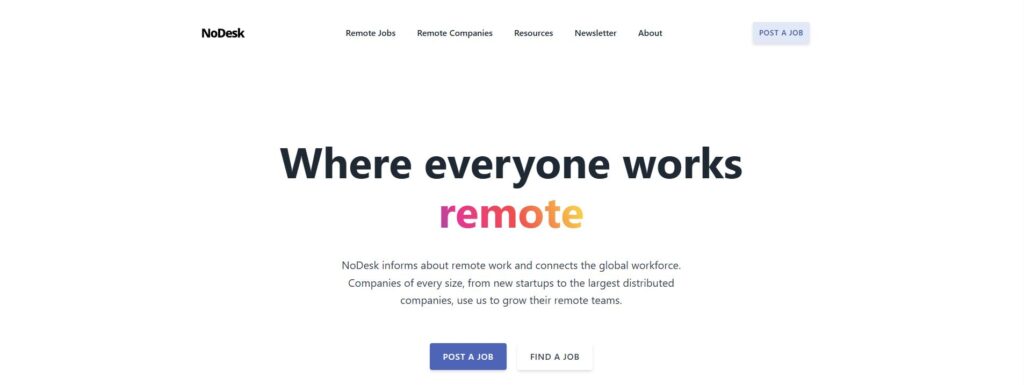
1. No Desk

What it is

NoDesk is a platform that helps companies build remote‐first teams and aids job‐seekers in finding remote work. It offers a job board of remote roles, a directory of remote‐friendly companies, and resources about remote work.

Key offerings

  • Remote job listings across roles, contract types, and geographic regions.
  • Company profiles for remote‐first employers to showcase culture and attract talent.
  • Articles, blogs, books and a newsletter aimed at remote workers and distributed teams.

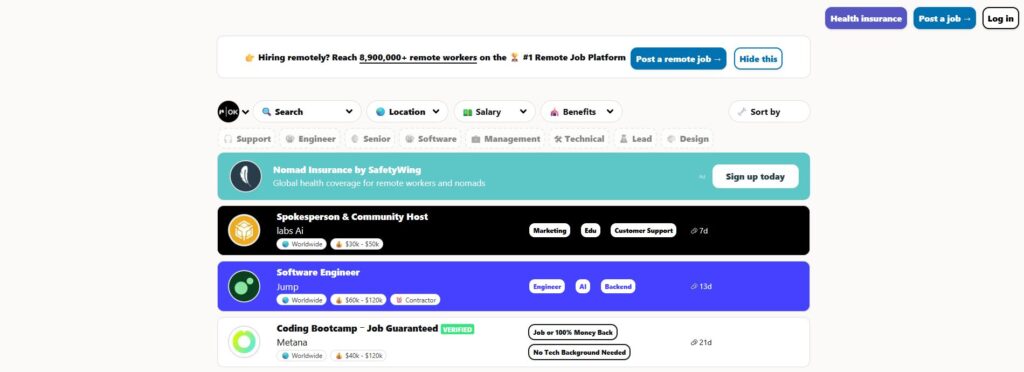
2. Remote OK

What it is

Remote OK is a global remote-jobs marketplace where companies post fully remote roles and candidates can apply from anywhere in the world.

Key offerings

  • Daily updated listings for tech, design, marketing, support, and more.
  • Filters for time zone, salary, job type, and region.
  • Employer tools to post remote roles and reach worldwide talent

3. FlexJobs

What it is

FlexJobs is a job-site founded in 2007 that specialises in listing vetted remote, work-from-home, hybrid and flexible-schedule roles.

Key offerings

  • Hand-screened, high-quality job listings across 50+ career categories, free from scams, ads or junk.
  • Advanced search tools for remote, part-time, freelance or hybrid jobs, and resources like webinars, downloadable guides and career advice.
  • Support for both job-seekers and employers: for employers it offers remote/flexible recruiting, branding and candidate sourcing.

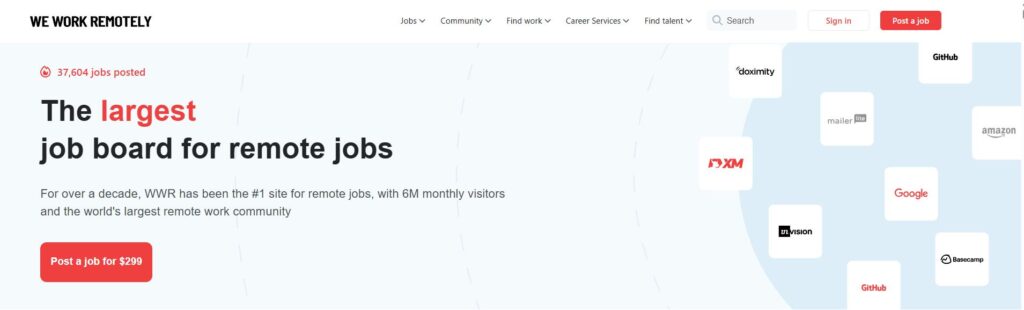
4. We Work Remotely

What it is

We Work Remotely is one of the largest dedicated job boards for 100% remote work, serving companies and job-seekers worldwide.

Key offerings

  • A wide range of remote job listings across tech, design, marketing, customer support, and more.
  • Global reach: roles available “Anywhere in the World” and not strictly tied to one country.
  • For employers: a channel to access a large remote-work-oriented audience (the site claims millions of monthly visitors).

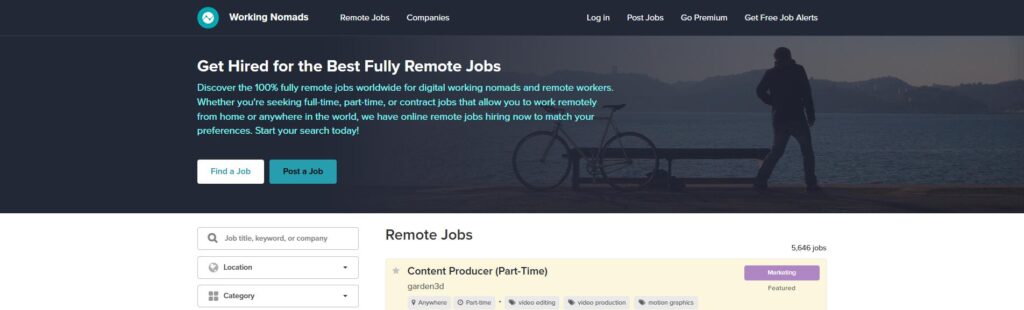
5. Working Nomads

What it is

Working Nomads is a remote-job board launched in 2014 that curates fully remote opportunities worldwide across many categories.

Key offerings

  • Listings of 100% remote jobs (full-time, part-time, contract) across development, design, marketing, sales, education, and more.
  • Region-based filters (Anywhere, North America, Europe, LatAm, etc.) so candidates can target roles by geography.
  • Employer service to post remote job openings and reach a global talent pool.

6. Just Remote

What it is

JustRemote is a job-board platform focused on fully and partially remote roles, helping workers from anywhere connect with companies hiring remotely.

Key offerings

  • A curated listing of remote jobs across various fields: development, design, marketing, sales, HR, content, etc.
  • Advanced filters and search tools to help apply from anywhere in the world and match the right roles to your location or timezone needs.
  • For employers: job-posting capability geared toward remote hires with emphasis on visibility and engagement for remote-friendly roles.

7. JS Remotely

What it is

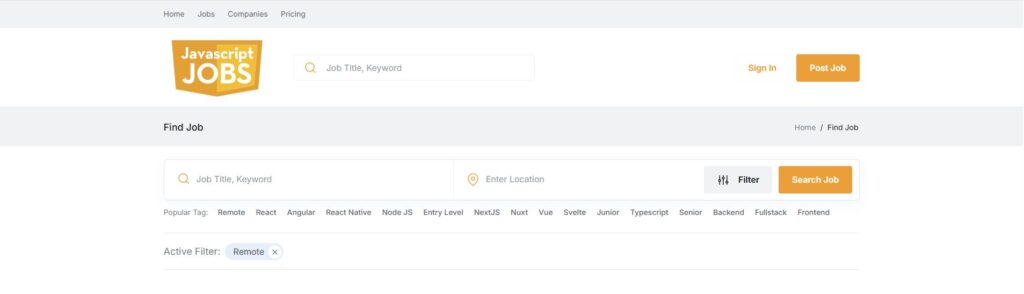
Javascript.Jobs is a job board exclusively focused on roles involving JavaScript – covering frameworks and environments like React, Angular, Node.js, TypeScript and more.

Key offerings

  • Listings of JavaScript-centric jobs across frontend, backend, full-stack, remote and onsite.
  • A strong remote component, with a dedicated “Remote JavaScript Jobs” section.
  • Employer job-posting capability, with traffic stats (e.g., “20,000+ monthly visitors”) and large number of listings/companies.

Final Thoughts

Remote job boards aren’t created equal. Some excel at high-quality curation, others at global reach, and a few niche platforms dominate specific skill categories. The smartest approach – for candidates and employers – is to use a mix of these sites instead of relying on just one. Whether you’re hiring or job-hunting, the real advantage comes from knowing where each platform delivers its strongest value and leveraging that intentionally. In a crowded remote-work landscape, strategy beats volume every time.

  •  

Top 10 Web3 Development Companies for 2025

Summary: The article helps you get familiar with a list of the top Web3 development companies that lead innovation in 2025. These are the firms that specialize in blockchain, DeFi, smart contracts, NFTs, and decentralized apps to provide safe, scalable, and business-grade solutions. They focus on agile delivery to empower the cutting-edge digital ecosystems.

Web3 is making a significant transformation in how the Internet operates. It focuses on transparency, security, scalability, and user control. Businesses today are using Web3 to develop apps with smart contracts, blockchain, decentralized finance, and NFTs. Whether you are rolling out a crypto wallet or developing a metaverse experience, the companies mentioned below lead the web3 innovation with their proficient teams and years of experience. With the rising prevalence of Web3, it is crucial to select an appropriate development partner. The present guide highlights the top Web3 development companies that deliver reliable blockchain solutions across different sectors.

List of Top 10 Trusted Web3 Development Companies for 2025

Now, let’s review the details of some of the top web3 development companies popular for delivering reliable, scalable, secure, and advanced blockchain solutions across diverse sectors.

1. eSparkBiz

  • Clutch Rating: 4.9
  • Established In: 2010
  • Projects Completed: 1000+
  • Price: $12 to $25 / hr
  • Time Zone Availability: GMT, ECT, IST, JST, MET, AET, NST,  CST, PST, EST
  • Min Project: $5,000+
  • Employees: 400+

eSparkBiz is renowned as one of the prestigious web3 development companies, as it benefits enterprises with efficient, scalable, and decentralized solutions. The delivered solutions aptly match the modern business requirements and provide long-term strategic support.

Its web3 development services allow businesses to develop future-proof blockchain solutions using smart contracts, blockchain technology, and decentralized infrastructure. The company excels with its agile development processes and technical expertise that help it develop enterprise-grade Web3 solutions. You may be looking for a scalable app, dApp development, blockchain architecture, tokenization, etc. The company supports a seamless adoption of decentralized technology.

2. Jalasoft

  • Clutch rating: 4.9
  • Foundation year: 2001
  • Timezones: 5
  • Hourly rate: $25 – $49 / hr
  • Min project size: $100,000+
  • Employees: 1,000+

The key specialityspecialty of Jalasoft is nearshore software development. It provides full-cycle services in frontend, backend, DevOps, QA, and cloud. It is also well-known for its expertise in secure engineering, scalable architectures, Azure, and cutting-edge technologies (such as Azure and microservices). This level of versatility makes it competent to support decentralized or blockchain-based applications.

Their engineers enable same-time-zone collaboration and prioritize agility. You can have a direct consultation through its expert on demand model. It operates across 74 cities, suggesting its broad presence. Besides, it is ISO 27001 certified, which further contributes to its fame as one of the best web3 development companies.

3. Iron Forge Development

  • Clutch rating: 4.8
  • Foundation year: 2016
  • Timezones: 12
  • Hourly rate: $150 – $199 / hr
  • Min project size: $25,000+
  • Employees: 10-49

The aforementioned company is proficient at full-cycle software commercialization, through which organizations can boost their revenue and achieve expected growth. It also specializes in UI/UX design, 3D design, and mobile and app development.

Its expertise encompasses aspects like scalable applications, high-impact platforms (like food, fitness, and influencer marketing). To avail web3-specific solutions (such as decentralized technologies or blockchain), you need to have a direct consultation with the team. Its expert team members work with clients to ascertain that the correct architecture, APIs, frameworks, and other important components are incorporated.

4. Quest Global Technologies Limited

  • Clutch rating: 5.0
  • Foundation year: 2013
  • Timezones: 12
  • Hourly rate: <$25
  • Min project size: $10,000+
  • Employees: 50+

This innovative web3 development company provides a wide range of blockchain solutions, including crypto wallets, DApps, token creation, and decentralized exchanges. Also, its services incorporate smart contracts, crypto marketing, etc. What makes it rank as one of the top web3 development companies is that it has completed more than 500 projects and served a plethora of global clients.

It is ISO 27001 certified, and the profound technical expertise further justifies its popularity. The list of tools/platforms it works with is Angular.js, CSS3, HTML5, Bootstrap, Salesforce, etc. It operates across Canada, India, the USA, and the UAE.

5. Technorely

  • Clutch rating: 5.0
  • Foundation year: 2018
  • Timezones: 3
  • Hourly rate: $50 – $99 / hr
  • Min project size: $5,000+
  • Employees: 50+

Technorely is one of the best web3 development companies for clients in search of custom blockchain as well as web3 development. It efficiently builds scalable, secure, decentralized solutions that meet the needs of healthcare, industrial, and fintech sectors. It works on full-cycle development, from MVP to the enterprise-grade platforms.

It promises flexible collaboration across time zones because its development centers are located in the USA, Ukraine, and Canada. The dedication to transparency, lasting partnerships, and anticipated results positions this company as a reliable tech partner.

6. Webisoft

  • Clutch rating: 4.9
  • Foundation year: 2016
  • Timezones: 1
  • Hourly rate: $50 – $99 / hr
  • Min project size: $5,000+
  • Employees: 10-49

Webisoft’s engineering labs are in Miami and Montreal, from where it provides cutting-edge web3 development solutions. Primarily, it specializes in areas like blockchain infrastructure, tokenomics, and blockchain infrastructure. It also efficiently provides solutions related to smart contracts, layer1/layer2 protocols, and zero-knowledge proof systems.

Its senior engineers and product-focused approach suggest that it effectively provides secure, scalable, and user-centric decentralized applications. Note that all its development projects are managed in-house; they are not outsourced. This ensures smooth collaboration and superior quality output. Besides, Webisoft can serve its web3 solutions to both enterprises and startups. Its services encompass a broad range from meme coins to complex blockchain systems.

7. NetSet Software Solutions

  • Clutch rating: 5.0
  • Foundation year: 2011
  • Timezones: 7
  • Hourly rate: $25 – $49 / hr
  • Min project size: $10,000+
  • Employees: 400+

This company effectively provides cutting-edge web3 development services with its custom blockchain solutions. These include DeFi platforms, smart contracts, prediction markets, and digital asset systems. The company is proficient in Solana, Polygon, and Ethereum ecosystems. Primarily, it uses Rust and Solidity while working on blockchain-based solutions.

Its 99% client satisfaction ratio and the huge number of successful projects being completed suggest that the company is prestigious for its swift MVP delivery. Besides, it is CMMI and ISO certified, which further justifies its position as one of the top web3 development companies. Its agile development is found to be 30% faster than that of its competitors.

8. Ancient

  • Clutch rating: 4.9
  • Foundation year: 2014
  • Timezones: 3
  • Hourly rate: $25 – $49 / hr
  • Min project size: $10,000+
  • Employees: 400+

Ancient emphasizes insurance, fintech, and cloud-based solutions. It builds scalable, secure platforms by applying industry best practices. It excels in web3 development, and the corresponding solutions are integrated into fintech products such as digital credit systems and neobanks.

What makes it a well-known web3 service provider is its agile delivery, successful clients, and expert teams. It primarily focuses on predictive modeling, automation, and user-focused design to deliver efficient outcomes.

9. SpaceDev

  • Clutch rating: 5.0
  • Foundation year: 2017
  • Timezones: 6
  • Hourly rate: $50 – $99 / hr
  • Min project size: $25,000+
  • Employees: 400+

SpaceDev delivers its web3 development services via its global hubs existing in several countries, like Argentina, Uruguay, Colombia, and the U.S. The key areas of specialization include smart contract engineering, blockchain infrastructure, decentralized apps, and NFT marketplaces.

It supports two engagement models. One of them is MVP Builder, which is suitable for swift product launches. Another one is IT Staff Augmentation, which works well for scalable tech talent. Its profound expertise in Web2 & Web3 ecosystems, and agile delivery make it a popular web3 service provider.

10. Cheesecake Labs

  • Clutch rating: 4.9
  • Foundation year: 2013
  • Timezones: 4
  • Hourly rate: $50 – $99 / hr
  • Min project size: $50,000+
  • Employees: 400+

The nearshore teams in this company specialize in mobile, web, and blockchain technologies. The company has built more than 300 custom apps. It holds enough experience working on decentralized platforms, crypto wallets, easy-to-use front-ends (for web3 platforms), and NFT marketplaces.

Its skilled teams help plan, design, and develop Web3 products from start to end. They work in multiple time zones that match their clients, thus simplifying the communication. It is one of the best web3 development companies, renowned for working with both large-scale companies and startups.

Conclusion

With the continuous digital innovation brought by Web3, the discussed companies stand out with their technical prowess, reliable services, and commitment to developing user-first, decentralized solutions. Ranging from blockchain infrastructure to NFT platforms, these companies shape the future of the Internet. Any startup or large-scale enterprise can partner with any of these Web3 development companies to advance in their journey into the decentralized world. Choosing the right firm means you get not a developer but a reliable partner in your web3 journey.
  •  

60+ SEO Tools The Ultimate SEO Tools Cheatsheet

IIf you work in digital marketing or content writing, you already know how important SEO is. It helps your content reach the right audience and perform better online. But with so many tools available, it can get confusing to choose the right ones.

That’s why I’ve put together this SEO tools cheatsheet – a quick list of tools that can help you with everything from keyword research to link building, content writing, and analytics. You don’t need to use them all, but it’s good to know what each one can do.

Let’s break them down by category 👇

🧩 Link Building & Analysis

Link building helps improve your website’s authority and visibility. These tools make it easier to find link opportunities, analyze backlinks, and manage outreach.

  • Lemlist – Helps you send personalized outreach emails.
  • Respona – Great for blogger outreach and PR campaigns.
  • Majestic – Shows detailed backlink data with Trust Flow metrics.
  • MOZ Link Explorer – Lets you explore backlinks and find link gaps.
  • Hunter.io – Helps find verified email addresses for outreach.
  • Ninja Outreach – Useful for finding influencers and managing outreach.
  • Mailshake – Makes email campaigns simple and automated.
  • GMass – Gmail-based tool for sending bulk personalized emails.
  • Pitchbox – Helps with link prospecting and managing outreach.
  • SEMrush Backlink Analytics – Gives a complete view of backlinks and referring domains.
  • Ahrefs – One of the most popular tools for backlink and competitor analysis.
  • BuzzStream – Keeps your outreach and relationships organized.

✍ Content Creation & Optimization

Good content is the foundation of SEO. These tools help you write, optimize, and improve your content quality.

  • Clearscope – Suggests keywords and helps optimize your articles.
  • Jasper.ai – AI tool that helps you write SEO-friendly content quickly.
  • Grammarly – Checks grammar and improves readability.
  • Rytr – AI content generator for blogs, captions, and short posts.
  • BuzzSumo – Shows trending topics and popular content ideas.
  • Frase – Helps research topics and optimize your content for SEO.
  • Surfer SEO – Gives on-page optimization tips based on competitors.
  • Google Trends – Tells you what people are currently searching for.
  • AlsoAsked – Finds related questions to include in your content.
  • Feedly – Keeps you updated with the latest news and trends.
  • WriteSonic – AI writing tool for blogs, ads, and landing pages.
  • Copy.ai – Helps write catchy marketing content.
  • MarketMuse – Suggests topics and keywords for better optimization.

📊 Analytics & Reporting

To know if your SEO is working, you need to track results. These tools help you analyze data and create reports.

  • Google Data Studio / Looker Studio – Turns your data into clear reports.
  • Google Analytics – Tracks website traffic and user behavior.
  • DashThis – Makes it easy to create automated SEO reports.
  • Databox – Combines data from different tools into one dashboard.
  • Clicky – Simple tool for real-time website analytics.

🔑 Keyword Research

Keyword research helps you understand what people are searching for. These tools show keyword volume, competition, and trends.

  • SimilarWeb – Gives traffic and keyword insights for competitors.
  • Ahrefs – Finds keywords and shows their search difficulty.
  • SEMrush – Great for finding keyword ideas and analyzing competitors.
  • AnswerThePublic – Visualizes what people ask online.
  • MOZ Keyword Explorer – Helps find the best keywords for your content.
  • SE Ranking – Tracks rankings and gives keyword suggestions.
  • AccuRanker – Accurate rank tracking tool.
  • Google Keyword Planner – Free tool for keyword ideas.
  • KWFinder – Finds low-competition keywords easily.
  • Advanced Web Ranking – Helps track keyword positions across locations.
  • Keyword Tool.io – Generates keyword ideas from Google, YouTube, and more.
  • Ubersuggest – Offers keyword ideas, traffic stats, and SEO audits.

⚙ On-Page Optimization

These tools help you improve your website pages so they perform better on search engines.

  • All in One SEO Pack – WordPress plugin for managing on-page SEO.
  • SEOPress – Helps with metadata, schema, and sitemaps.
  • Yoast SEO – One of the most popular SEO plugins for WordPress.
  • RankMath – Advanced SEO plugin with keyword optimization features.
  • Keyword Insights – Helps group and plan content based on keyword intent.

🧠 Technical SEO

Technical SEO ensures your site loads fast, is easy to crawl, and works properly behind the scenes.

  • Screaming Frog – Scans your site for technical issues.
  • DeepCrawl – Useful for large-scale site audits.
  • GTmetrix – Checks your website’s speed and performance.
  • Sitebulb – Gives visual reports of your site’s SEO health.

📍 Local SEO

If you want to rank locally, these tools can help manage your business listings and reviews.

  • Grade.us – Helps gather and manage customer reviews.
  • BrightLocal – Ideal for local SEO audits and reporting.
  • GatherUp – Makes it easy to collect feedback and reviews.
  • MOZ Local – Keeps your local business listings consistent.
  • Yext – Manages business information across directories.
  • Google PageSpeed Insights – Checks your site speed, which affects local ranking too.

💬 Final Thoughts

SEO might look complicated, but with the right tools, it becomes much easier. You don’t need to use all of them – just pick the ones that fit your goals.

If you’re just starting out, begin with free tools like Google Analytics, Google Keyword Planner, and Yoast SEO. As you grow, you can explore advanced options like Ahrefs, Surfer SEO, or BrightLocal to get deeper insights.

Use this cheatsheet as your quick reference whenever you plan, create, or analyze your SEO strategy. It’ll save time, improve your results, and help you stay on top of your game!

  •  

83 Best Websites for SEO in 2025

IIf you’ve ever tried to improve your website’s visibility on Google, you already know SEO isn’t simple. Between constant algorithm updates, new competitors entering the space, and dozens of ranking factors to keep in mind, it can feel overwhelming. The good news? You don’t have to figure it all out alone.

There are plenty of tools out there designed to make SEO easier, faster, and more effective. From keyword research and backlink tracking to site audits and content optimization, the right platform can save you hours of work and point you in the right direction.

That’s why I’ve pulled together this list of the 83 best SEO websites to use in 2025. Think of it as your go-to toolbox-whether you’re a beginner trying to get your first rankings or a marketer managing multiple client sites, you’ll find something here that makes your SEO journey a lot smoother.

83 best SEO websites

  1. semrush.com – SEO toolkit (free trial in comments)
  2. ahrefs.com – backlink and keyword research
  3. LongTailPro.com – long-tail keywords tool
  4. BrightLocal.com – local SEO management
  5. HitTail.com – long-tail keyword suggestions
  6. rankalyzer.io – SEO competitor analysis
  7. moz.com – SEO software suite
  8. majestic.com – link analysis tool
  9. localfalcon.com – local rank tracking
  10. plerdy.com – conversion rate optimization
  11. Serpstat.com – growth hacking tool for SEO
  12. clearscope.io – content optimization
  13. KeywordTool.io – keyword finder
  14. woorank.com – SEO & website analysis
  15. Conductor.com – SEO platform for enterprises
  16. RankMath.com – WordPress SEO plugin
  17. Grammarly.com – content proofreading for SEO
  18. AccuRanker.com – accurate keyword ranking
  19. DeepCrawl.com – technical SEO platform
  20. Yoast.com – WordPress SEO plugin
  21. Sitebulb.com – website auditing
  22. Linkody.com – backlink tracker
  23. KWFinder.com – SEO keyword tool
  24. ContentKingApp.com – real-time SEO auditing
  25. SerpWatch.io – track search engine positions
  26. SeedKeywords.com – find valuable keywords
  27. WebsiteGrader.com – site performance review
  28. PageOptimizer.pro – on-page optimization tool
  29. Botify.com – end-to-end SEO platform
  30. CognitiveSEO.com – complete SEO tool
  31. SEOquake.com – browser-based SEO analytics
  32. CanIRank.com – AI SEO software
  33. serpbook.com – keyword rank tracking
  34. Coschedule.com – content marketing calendar
  35. SEOToolSet.com – suite of SEO tools
  36. RavenTools.com – SEO reports & research
  37. SEORadar.com – monitor SEO changes
  38. OnCrawl.com – SEO crawler and log analyzer
  39. TrafficTravis.com – free SEO software
  40. MarketMuse.com – AI content planning
  41. SEOClarity.net – SEO platform
  42. SiteChecker.pro – on-page SEO checker
  43. SurferSEO.com – data-driven content optimization
  44. PanguinTool.com – Google algorithm update checker
  45. SearchMetrics.com – SEO & content marketing platform
  46. NetpeakSoftware.com – SEO tool suite
  47. TheHoth.com – SEO and content marketing
  48. ContentHarmony.com – content planning
  49. Link-Assistant.com – link management
  50. KeywordRevealer.com – keyword research tool
  51. GShiftLabs.com – web presence analytics
  52. GreenlaneSEO.com – SEO tools and services
  53. KeywordEye.com – keyword & competitor research
  54. SERPwoo.com – niche SEO & ORM tool
  55. SEObility.net – SEO audit and monitoring
  56. AuthorityLabs.com – SEO rank monitoring
  57. MonitorBacklinks.com – backlink tracking
  58. NinjaOutreach.com – influencer marketing + SEO tool
  59. Databox.com – SEO performance tracking
  60. AdvancedWebRanking.com – cloud-based SEO tool
  61. TextTools.net – semantic SEO tool
  62. RankWatch.com – SEO management platform
  63. Sistrix.com – SEO analytics and visibility index
  64. SimilarWeb.com – website traffic and analytics
  65. STATSearchAnalytics.com – SERP analytics
  66. URLProfiler.com – audit and content tool
  67. Pitchbox.com – outreach and link building
  68. Copyscape.com – plagiarism checker for SEO
  69. LinkResearchTools.com – backlink analysis tool
  70. Zutrix.com – keyword rank tracker
  71. Nightwatch.io – SEO tracker and reporting tool
  72. SEOReseller.com – white label SEO platform
  73. NobleSamurai.com – keyword research + SEO software
  74. WordTracker.com – keyword research tool
  75. SEOBox.com – Spanish SEO platform
  76. SerpYou.com – clean and simple SERP tracker
  77. AgencyAnalytics.com – SEO reporting tool for agencies
  78. RankActive.com – versatile SEO toolkit
  79. SERanking.com – all-inclusive SEO software
  80. Sightliner.com – interlinking and duplicate content tool
  81. Lipperhey.com – SEO & website analyzer
  82. SheerSEO.com – SEO and online marketing software
  83. Pulno.com – website audit tool

Conclusion

At the end of the day, SEO is a long game. No single tool will magically shoot you to the top of Google, but combining the right ones can give you a serious edge. The websites in this list cover just about every area you’ll need help with-keywords, content, backlinks, technical fixes, and more.

My advice? Don’t try to use all 83 at once. Start with two or three that match your immediate needs-maybe a keyword tool, a site audit tool, and a content optimizer-and build from there. As your SEO skills grow, you’ll naturally start adding more advanced tools to your stack.

SEO in 2025 is all about working smarter, not harder. With the right tools in your corner, you can cut through the noise, stay ahead of competitors, and actually enjoy the process of growing your site.

  •  

Keyword Golden Ratio, What Is It? How to Use It to Rank Quickly in 2025?

What is Keyword Golden Ratio?

KKGR is a modern strategy for finding low-competition keywords that can help your content rank quickly on search engines. It suggests that there is an ideal ratio of keyword usage that can maximize search visibility without triggering penalties for keyword stuffing or over-optimization.

KGR = (Number of Search Results with Keyword in Title) / (Monthly Search Volume)

Keyword Research

Start by using keyword research tools like Google Keyword Planner, SEMrush, or Ahrefs to find long-tail keywords relevant to your niche with a monthly search volume below 250.

Calculate the Keyword Golden Ratio

KGR for a keyword, do a Google search using quotation marks around the keyword. Take note of the number of search results displayed on the top right of the page. (Assume 60,000 results). Then, divide this number by the average monthly search volume (Assume 1,000) and use formula. If the calculated ratio is less than 0.25, Good to GO!

Create Targeted and High-Quality Content

After finding KGR, write high-quality and info-rich content around targeted keywords. Ensure that the keyword is included in the title tag, URL, and throughout the content in a natural way. Don’t stuff or overoptimize it!

Focus on User Intent

Search engines value content that matches the searcher’s intent and provides relevant information. By creating valuable content, you stand a better chance of increasing engagement, dwell time, and ultimately, your rankings.

Semantic Keyword Diversity

In addition to your primary target keyword, use semantically related keywords and phrases that provide context and depth to your content. This helps search engines better comprehend the topic and relevance of your content.

Monitor Analytics

Keep an eye on your content’s performance and user behavior metrics. If you’re not seeing any improvements in rankings, you might need to update and improve your content or build more backlinks to it or optimize it according to need.

Publishing and Promotion

After publishing, you can share the article on social media platforms, relevant forums, and reach out to other authoritative blogs for potential backlinks or shares. It will give a boost to your article and increase the chances to rank high.

KGR can help you find those hidden gem keywords that have been overlooked by others but are still sought after by a specific audience. This method isn’t foolproof, as search engine algorithms are constantly changing.

  •  

51 Types of SEO Every Marketer Should Know

WWhen we hear the word SEO, most of us think about just optimizing websites with keywords or building backlinks. But SEO is so much more than that. In fact, it has grown into dozens of specialized practices-each with its own goals, techniques, and tools.

If you’re a marketer, recruiter, business owner, or content creator, understanding the different types of SEO can help you choose the right strategy for your goals. Let’s break down the 51 types of SEO into categories.

General SEO

These are the foundations of search engine optimization:

1. On-page SEO: Optimizing page content, meta tags, titles, and internal linking.
2. Off-page SEO: Building backlinks, brand mentions, and authority outside your website.
3. Technical SEO: Making sure your website’s backend is search-engine friendly (site speed, indexing, crawlability, etc.).

Technical SEO Variations

Technology shapes how search engines crawl and understand websites. Here are some specialized branches:

4. Mobile SEO: Ensuring websites are mobile-friendly.
5. Accessibility SEO: Optimizing for users with disabilities (e.g., screen readers).
6. Edge SEO: Using server-side optimizations and edge computing.
7. JavaScript SEO: Making JS-heavy websites crawlable.
8. React SEO / Next.js SEO / Headless SEO: SEO for modern frameworks and headless CMS platforms.

Content SEO

Content is still king, but SEO helps it shine:

9. Landing Page SEO: Optimizing pages designed to convert.
10. Blog SEO: Structuring blog content for both readers and search engines.
11. Content SEO: Overall content strategy for keyword ratio relevance.
12. Semantic SEO: Targeting search intent and meaning behind queries.
13. Multimedia SEO: Optimizing images, videos, and infographics.

Local & International SEO

Businesses with physical locations or global reach need specialized strategies:

14. Local SEO: Getting found in Google Maps and “near me” searches.
15. International SEO: Targeting global markets.
16. Multi-lingual SEO: Optimizing websites in multiple languages.

Platform-Specific SEO

Different platforms need different strategies:

17. eCommerce SEO: Optimizing online stores.
18. YouTube SEO: Ranking videos on YouTube and Google.
19. App Store SEO (ASO): Making apps visible in app stores.
20. Amazon SEO / Etsy SEO / Shopify SEO / Squarespace SEO / WordPress SEO / Wix SEO: Tailoring strategies to specific platforms.
21. Social Media SEO: Boosting visibility of social content.
22. News SEO / Google Discover SEO: Getting content featured in news and discovery feeds.
23. Yep SEO 😉: A fun nod to Ahrefs’ own search engine!

Specialized SEO Types

These focus on unique use cases:

24. Image SEO / Video SEO:Optimizing media for search.
25. Programmatic SEO: Scaling SEO with automation.
26. Holiday SEO: Seasonal campaigns (Black Friday, Christmas, etc.).
27. Featured Snippet SEO: Winning position zero.
28. Long-tail SEO: Targeting niche queries with lower competition.
29. SaaS SEO / Enterprise SEO / Niche SEO: Tailored to business models.
30. Voice SEO: Preparing for voice search queries.
31. AI SEO: Leveraging artificial intelligence tools.
32. Taxonomy SEO: Structuring site categories and tags.

SEO Philosophies

Finally, SEO isn’t just about tactics—it’s also about approach:

33. White Hat SEO: Ethical, long-term strategies.
34. Black Hat SEO: Aggressive, often risky tactics.
35. Grey Hat SEO: A mix of both worlds.
36. Negative SEO: Harmful tactics used against competitors.
37. Sustainable SEO: Eco-conscious, long-term strategies.
38. Continuous SEO: Ongoing optimization.
39. DIY SEO: Do-it-yourself SEO for small businesses.
40. Holistic SEO: Looking at SEO as part of a bigger digital ecosystem.

Final Thoughts

SEO is no longer a “one-size-fits-all” discipline. Whether you’re running an online store, growing a SaaS company, or just trying to get more visibility for your blog, there’s a specific type of SEO that can help.

The key is to choose the right mix of strategies, stay updated with trends, and always focus on adding value to your audience.

  •